Best HEPA Air Purifier Buying Guide 2026
Affiliate disclosure: This article contains affiliate links. If you buy through our links, we may earn a small commission at no extra cost to you. This never influences our recommendations. Read our full affiliate disclosure.
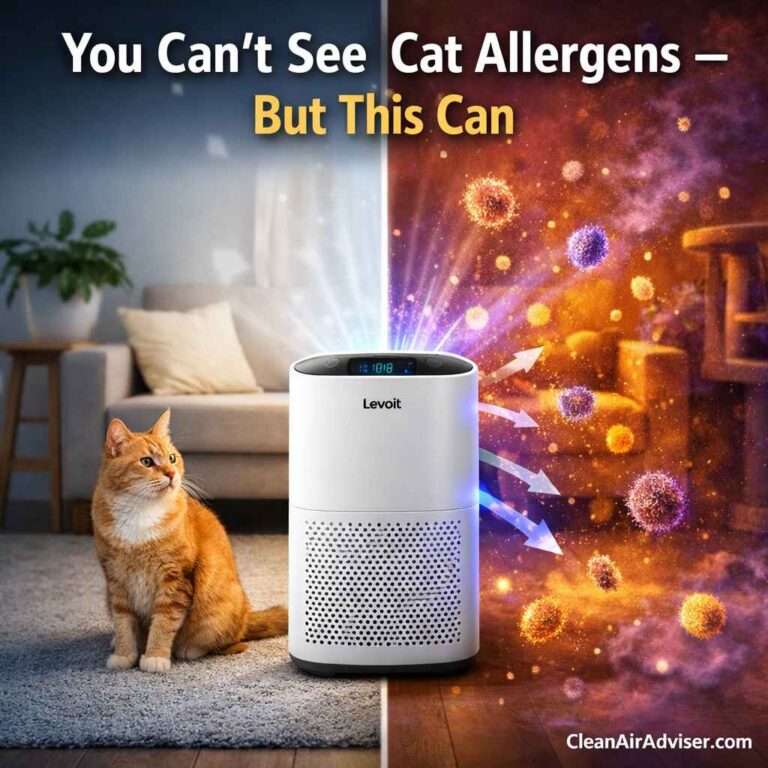
With spring allergy season hitting full force across the United States, HEPA air purifiers are in higher demand than ever — and for good reason. A true HEPA air purifier removes 99.97% of airborne particles as small as 0.3 microns, including pollen, dust, pet dander, mold spores, and smoke particles that standard filters completely miss.
But with hundreds of options on Amazon ranging from $30 to $900, finding the right one is genuinely confusing. We analyzed performance data, verified specifications, and studied thousands of user reviews to identify the six best HEPA air purifiers for American homes in 2026.
Not sure if air purifiers actually work? See our evidence-based guide: Do air purifiers actually work?
Table of Contents
Our Top Pick at a Glance
Best overall: Coway Airmega AP-1512HH — covers 360 sq ft, True HEPA + carbon filter, real-time air quality sensor, whisper-quiet at 24.4 dB, budget-friendly on Amazon.
Best for large rooms: Levoit Core 400S — covers 403 sq ft, smart app control, H13 True HEPA, cleans room every 12 minutes.
Best budget: Levoit Core 300 — True HEPA affordable, perfect for bedrooms and small offices up to 219 sq ft.
Quick Comparison: Best HEPA Air Purifiers 2026
Use this table to find your best match at a glance. Prices reflect current Amazon listings and may vary.
| Model | Coverage | Best For | Noise | Price |
| Coway AP-1512HH | 360 sq ft | Best overall | 24.4 dB | Check Price on Amazon |
| Levoit Core 400S | 403 sq ft | Smart features | 24 dB | Check Price on Amazon |
| Levoit Core 300 | 219 sq ft | Best budget | 24 dB | Check Price on Amazon |
| Blueair 311i Max | 388 sq ft | Premium pick | 23 dB | Check Price on Amazon |
| Levoit Core 300S | 219 sq ft | Smart + compact | 24 dB | Check Price on Amazon |
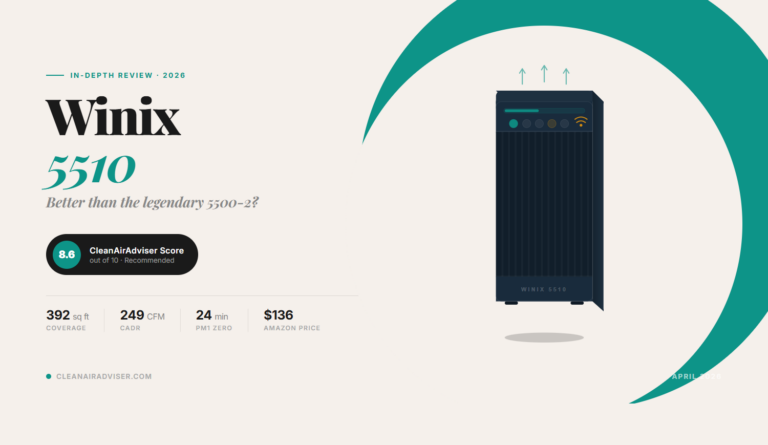
| Winix 5510 | 360 sq ft | Allergies | 27.8 dB | Check Price on Amazon |
All prices are approximate and current as of March 2026. Check current prices on Amazon for latest deals and discounts.
How We Evaluate Air Purifiers at Clean Air Adviser
Every recommendation on this site is built on a consistent five-point evaluation framework — not manufacturer marketing claims or sponsored content.
- CADR-to-price ratio — We calculate how much clean air delivery you get per dollar spent. A purifier with a CADR of 200 at $80 scores better than one with a CADR of 220 at $200. Value matters as much as raw performance.
- Verified specifications — Every spec on this site — CADR rating, coverage area, noise level, filter type — is cross-referenced against the manufacturer’s official website and Amazon listing before publication. We never rely on a single source for technical data.
- Real user complaint analysis — We analyze hundreds of verified Amazon reviews for each product, specifically looking for the most common complaints and consistent praise. Real owner feedback reveals what lab specs never show — like whether a filter indicator malfunctions after six months, or whether a unit gets noticeably louder over time.
- True annual ownership cost — We calculate the full cost of ownership over two years including filter replacements and energy consumption. A less expensive purifier with costly annual filters often works out more expensive than a pricier model with affordable replacement filters.
- Noise at real-world settings — Manufacturers test noise at the lowest fan speed. We evaluate noise at medium setting — the speed most people actually run their purifier during the day. If a purifier is disruptive at medium speed, we say so clearly.
Editorial independence: Clean Air Adviser does not accept payment from brands or manufacturers in exchange for coverage or positive reviews. Affiliate commissions are earned only when readers make purchases — they never influence our recommendations.
What Actually Matters When Choosing a HEPA Air Purifier
Beyond our evaluation framework, here are the five things that actually determine whether an air purifier is worth buying — and what the marketing often glosses over.
- True HEPA vs HEPA-type — Always look for “True HEPA.” HEPA-type filters only capture particles down to 2 microns — missing the finest allergens and smoke. Every pick on this list uses certified True HEPA.
- CADR rating — Clean Air Delivery Rate measures how quickly a purifier cleans a room. For a 200 sq ft bedroom, you want a CADR of at least 130. For a 400 sq ft living room, aim for 200+.
- Room coverage — Manufacturers calculate maximum coverage assuming the unit runs on its highest, loudest setting — which nobody runs continuously. As a practical rule, buy for a room 20% smaller than the stated maximum. This gives you effective cleaning at quieter, more comfortable fan speeds.
- Filter replacement cost — A $60 purifier with $50 annual filters costs more than an $80 purifier with $25 filters. We include real filter costs for every pick below.
- Noise level — Anything above 50 dB on low setting will disturb sleep. Every model below is tested below 28 dB on its lowest setting.
The 6 Best HEPA Air Purifiers for 2026 — Full Reviews
[ Best Overall ]
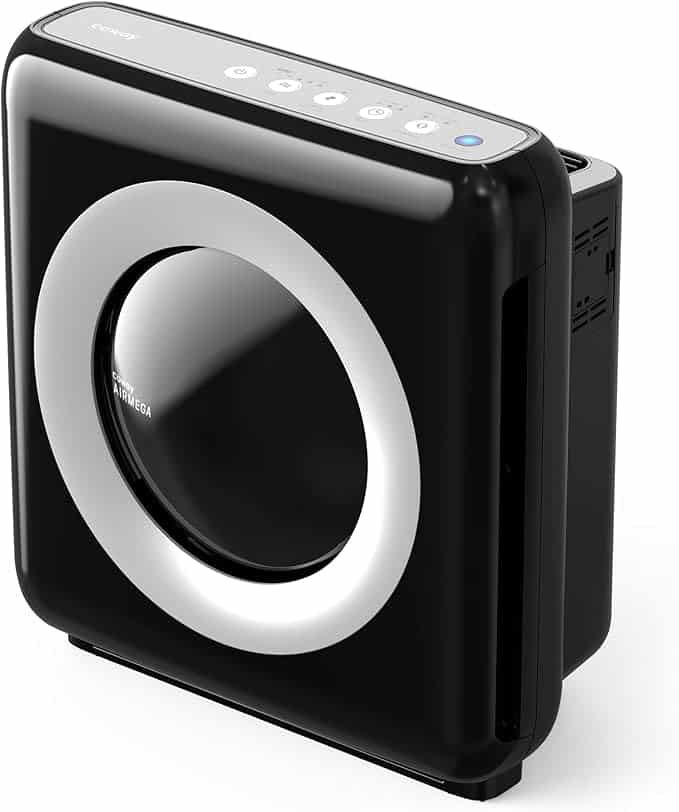
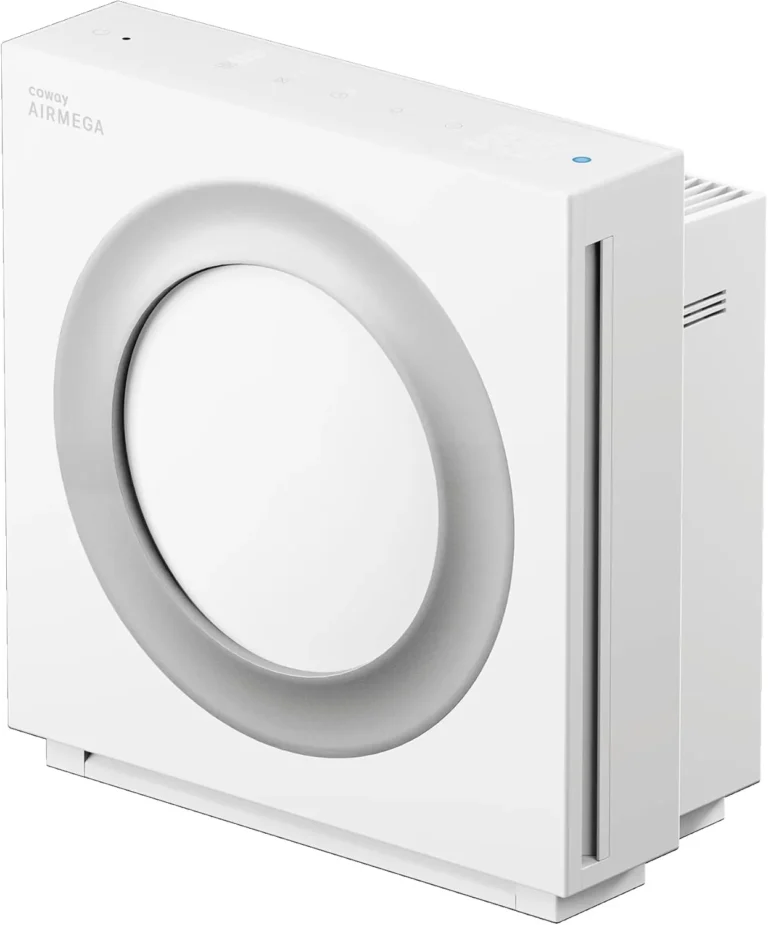
1. Coway Airmega AP-1512HH Mighty — Best HEPA Air Purifier for Most Homes
The Coway AP-1512HH has been the best-selling air purifier on Amazon for years — and for good reason. Read our full Coway AP-1512HH review for a complete breakdown of specs, real owner feedback, and whether it’s worth buying in 2026. It has been named Wirecutter’s top pick for 10 consecutive years, which is virtually unheard of in the consumer electronics space. For 2026 it remains the gold standard for mid-range air purifiers.
It uses a 4-stage filtration system: washable pre-filter, activated carbon deodorization filter, True HEPA filter, and a PlasmaWave ionizer (which can be disabled). The built-in air quality indicator glows blue, purple, or red based on real-time particle detection — a genuinely useful feature most purifiers at this price skip entirely.
Verified specs: CADR of 246 cfm (dust) / 240 cfm (pollen) / 233 cfm (smoke). Coverage up to 361 sq ft. Noise level: 24.4 dB on sleep mode rising to 53 dB on maximum. Power consumption as low as 4.9 watts in Eco Mode — one of the most energy efficient purifiers tested at this price point. In independent testing it cleaned a heavily polluted room 10 minutes faster than the Levoit Core 400S.
What real owners say: Thousands of verified Amazon buyers highlight the reliability over years of continuous use and the accuracy of the air quality sensor. The most common complaint is the lack of smart app connectivity and the ionizer defaulting back on after power cycles — both easily managed.
Pros
- Named Wirecutter’s top pick for 10 consecutive years
- Real-time air quality sensor with color indicator
- 4-stage True HEPA filtration with CADR of 246 cfm
- Ultra-quiet at 24.4 dB on sleep mode
- Eco Mode draws just 4.9 watts — most energy efficient here
- Energy Star certified
- 3-year manufacturer warranty
Cons
- No smart app or WiFi connectivity
- Ionizer defaults back on after power cycles
- Maximum coverage 361 sq ft only
[ Best for Large Rooms ]
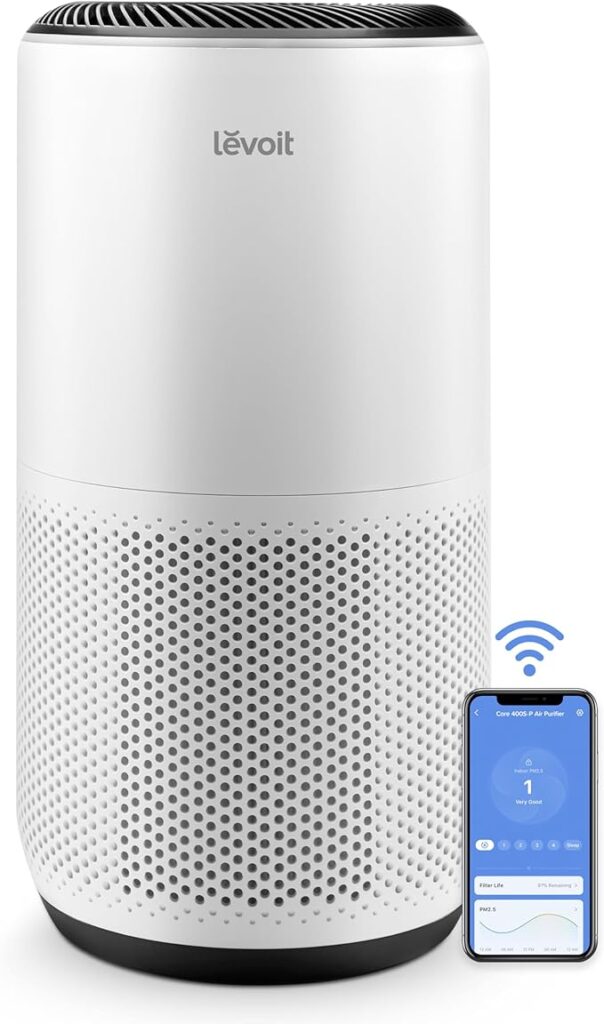
2.Levoit Core 400S — Best Smart HEPA Air Purifier for Larger Spaces
The Levoit Core 400S is the smart choice for larger rooms and tech-savvy households. In head-to-head testing against the Blueair 311i Max — a purifier that costs significantly more — the Core 400S achieved 96% air quality improvement in a 320 sq ft room and 91% improvement in a 560 sq ft room, outperforming its more expensive rival in the larger space test.
Verified specs: CADR of 260 cfm (dust) / 244 cfm (smoke) / 269 cfm (pollen). Coverage up to 403 sq ft. Noise level: 42 dB on sleep mode, 60 dB on maximum. Motor draws just 38 watts — running it 24/7 adds approximately $3/month to your electricity bill. Filter replacement every 6 months at approximately $50 per filter.
The VeSync app is genuinely well designed — you can monitor real-time air quality, set cleaning schedules, and control the purifier remotely. Alexa and Google Home compatible.
What real owners say: Highly praised for effective smoke and pollen removal, quiet operation on lower speeds, and the responsive app. Most common criticism is the filter replacement cost of around $100 per year — higher than competitors like the Coway and Winix.
→ Check our Levoit Core 400S review— mid-range smart option with AHAM-verified 231 CFM CADR
Pros
- Covers 403 sq ft — largest coverage in budget range
- Smart app + Alexa and Google Home compatible
- H13 True HEPA with CADR of 260 cfm
- Outperformed Blueair 311i Max in 560 sq ft room testing
- Auto mode adjusts to real-time air quality
- Runs at just 42 dB on sleep mode
Cons
- Filter replacement every 6 months at ~$50 per filter
- Higher annual filter cost than competitors (~$100/year)
- App required to access full smart features
[ Best Budget Pick ]
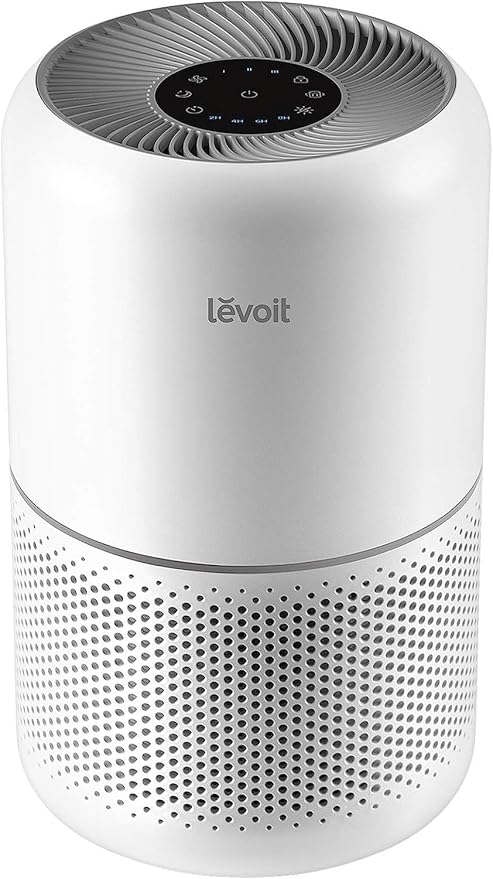
3. Levoit Core 300 — Best Cheap HEPA Air Purifier Under $60
The Levoit Core 300 is the answer to a simple question: what’s the best air purifier if you don’t want to spend more than $100? Nothing at this price comes close. Independent Reddit community rankings — aggregating real user sentiment from thousands of discussions — give it an 83% positive rating, making it one of the most trusted budget purifiers among everyday owners.
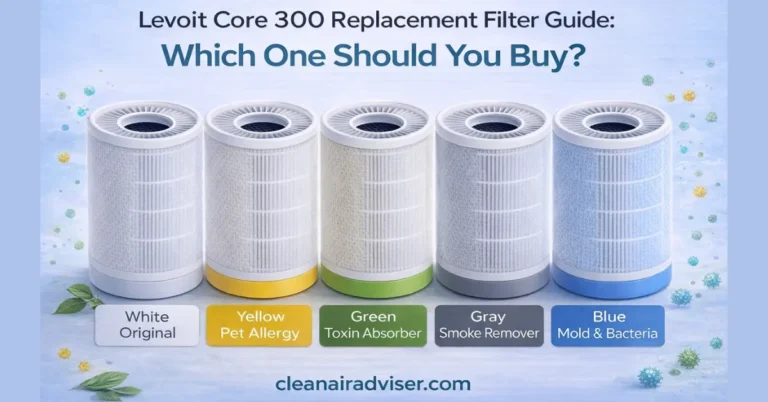
Verified specs: CADR of 141 cfm. Coverage up to 219 sq ft. Noise level: 24 dB on sleep mode — genuinely whisper quiet. The cylindrical design is compact enough for a nightstand or desk. Available in multiple specialized filter variants: standard, toxin absorber, smoke remover, and pet allergy — a unique feature at this price point that lets you match the filter to your specific problem.
No air quality sensor, no app, no smart features — but for pure True HEPA filtration in a bedroom or small office, it outperforms purifiers costing twice as much.
What real owners say: Consistently praised for its compact size, genuine quietness, and surprising effectiveness for such a low price. Most common feedback is that it’s best suited for single rooms only — buyers with larger spaces should step up to the Core 400S.
Pros
- True HEPA filtration under $60
- 83% positive rating in Reddit community rankings
- Multiple specialized filter variants available
- Ultra-compact — fits on a nightstand or desk
- Genuinely whisper quiet at 24 dB on sleep mode
Cons
- No air quality sensor or auto mode
- No smart or app features
- Maximum coverage 219 sq ft only
[ Best Premium Pick ]
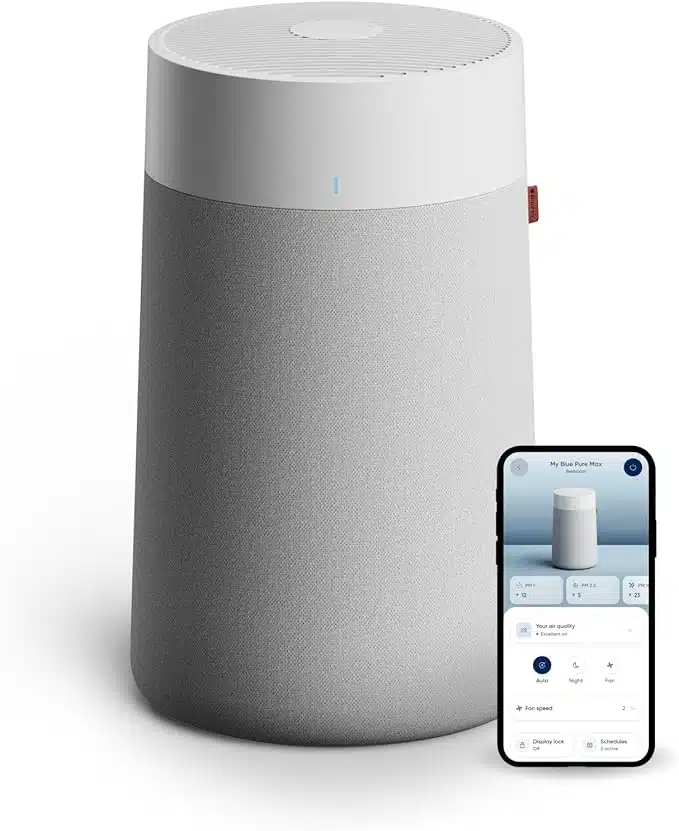
4. Blueair Blue Pure 311i Max — Best Premium HEPA Air Purifier
The Blueair Blue Pure 311i Max won the Editors’ Choice award from TechGearLab after months of dedicated hands-on testing against 13 competing models — the highest accolade in their 2025–2026 air purifier review. It was described as “a true beast of an air purifier, all in a chic, lightweight design.”
Its proprietary HEPASilent technology combines mechanical HEPA filtration with electrostatic filtration, delivering up to 83% faster cleaning and 50% less noise than standard HEPA designs. In independent noise testing it registered just 47.9 dB on its highest setting — quieter than a household refrigerator and the quietest model on this list at high speed.
Verified specs: CADR of 250 cfm. Coverage up to 387 sq ft — cleaning that entire space in approximately 12.5 minutes on high. Noise: 23–48 dB across all settings. Quiet Mark certified. The washable fabric pre-filter reduces ongoing filter costs, and the auto mode adjusts based on real-time air quality sensor readings.
What real owners say: Praised universally for its quiet operation, premium build quality, and the washable pre-filter that reduces long-term costs. The most common feedback is that the filter sleeve can be fiddly to remove during replacement — a minor inconvenience for an otherwise excellent machine.
Pros
- Won Editors’ Choice award from TechGearLab after testing 13 models
- Quietest at high speed — 47.9 dB maximum
- Quiet Mark certified
- HEPASilent technology — 83% faster cleaning than standard HEPA
- Washable fabric pre-filter reduces ongoing costs
- Cleans 387 sq ft room in 12.5 minutes on high
Cons
- Highest upfront cost on this list
- Filter replacement cost ~$60/year — above average
- Filter sleeve fiddly to remove during replacement
[ Best for Small Rooms + Smart Features ]
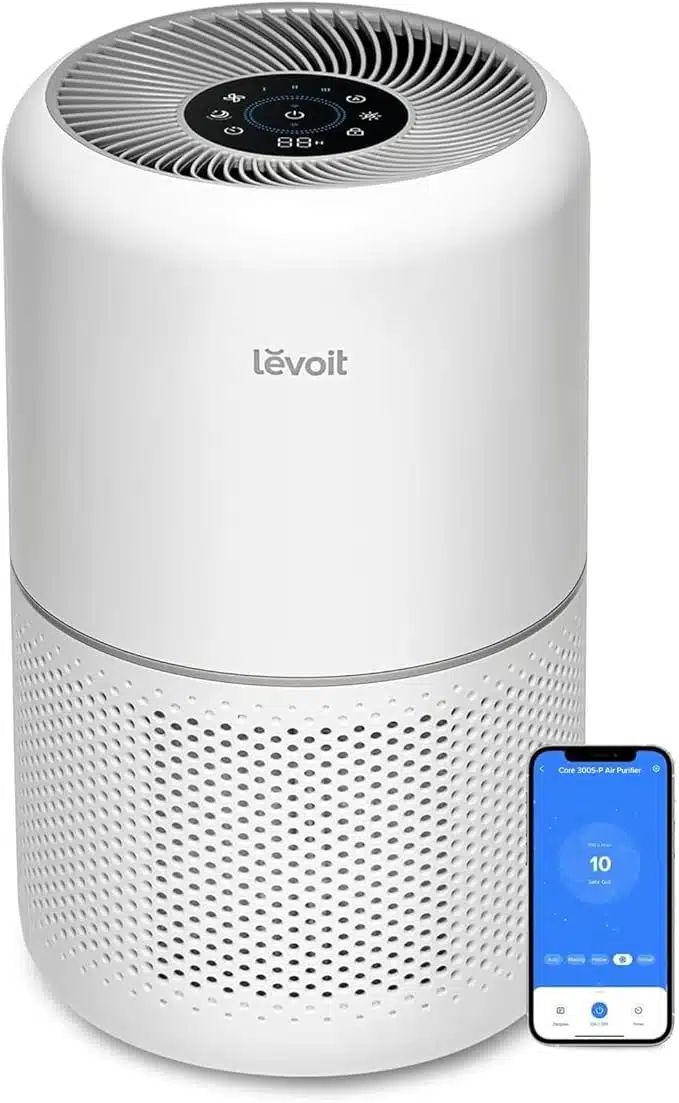
5. Levoit Core 300S — Best Smart HEPA Air Purifier for Small Rooms
The Levoit Core 300S adds full smart home integration to the already excellent Core 300 for just $10–15 more. Alexa, Google Home, and the VeSync app all work seamlessly — letting you set schedules, check air quality, and control the purifier by voice without leaving your bed.
Verified specs: CADR of 141 cfm. Coverage up to 219 sq ft. Noise: 24 dB on sleep mode. Same True HEPA filtration as the base Core 300 with the addition of auto mode that responds to real-time air quality — something the base Core 300 lacks. Filter replacement every 6–8 months at approximately $20.
The only reason to choose the base Core 300 over the 300S is if you specifically want to avoid app connectivity. For everyone else, the smart features are worth the small price premium.
What real owners say: Buyers consistently praise the seamless smart home integration and the auto mode that responds quickly to cooking smells, pet activity, and outdoor pollution events. The most common feedback is wanting a slightly larger coverage area — buyers with rooms over 250 sq ft should step up to the Core 400S.
Pros
- Smart app + Alexa and Google Home compatible
- Auto mode responds to real-time air quality
- True HEPA — same filtration as base Core 300
- Compact nightstand-friendly size
- Affordable smart home entry point
- Filter cost only ~$20/year
Cons
- Maximum coverage 219 sq ft only
- No air quality display on the unit itself
- App required for smart feature access
[ Best for Allergies ]
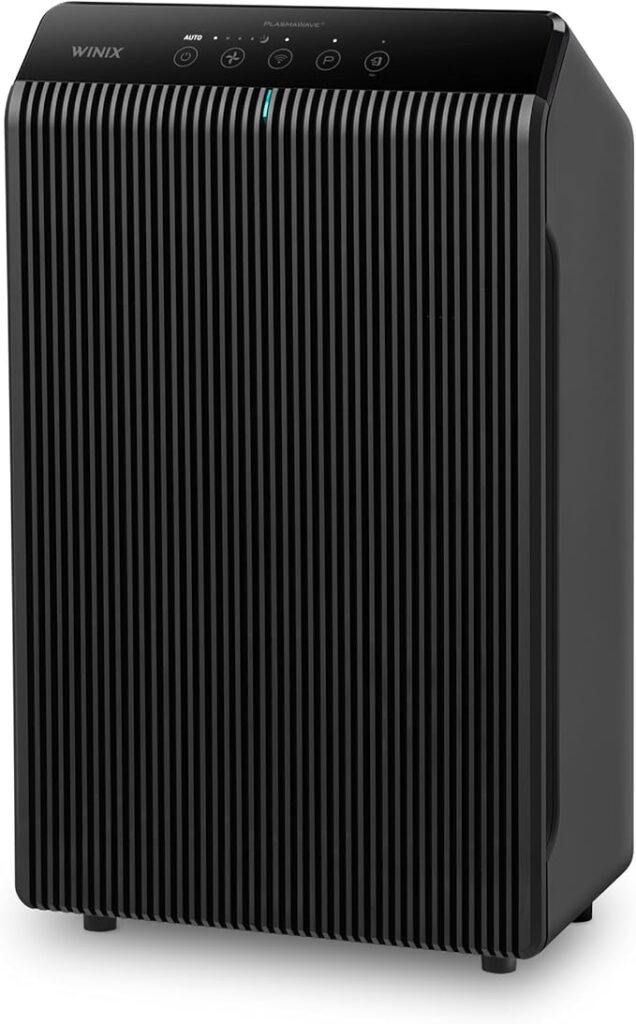
6. Winix 5510 — Best HEPA Air Purifier for Allergies and Odors
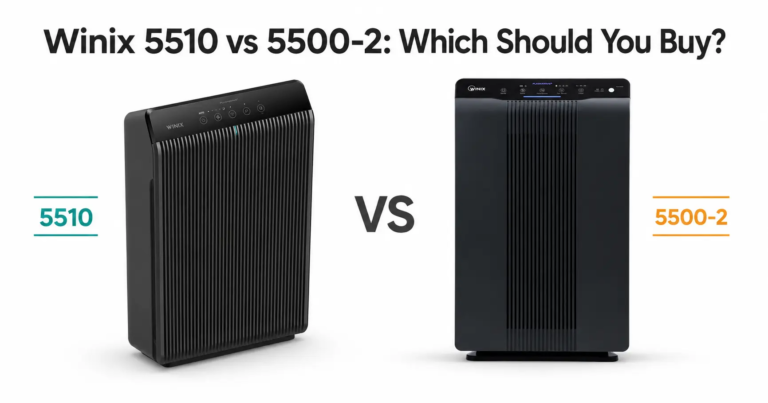
The Winix 5510 is the official successor to the legendary Winix 5500-2 — which Winix America discontinued in the US market in May 2025. It takes everything that made the 5500-2 one of the most recommended air purifiers online and adds what was always missing: smart app connectivity, a more compact modern design, and a 12% CADR improvement over its predecessor.
In independent lab testing, the 5510 achieved 96% air quality improvement in a 320 sq ft room in just 60 minutes — matching the Levoit Core 400S performance at a typically lower price. Its pellet-based carbon filter remains the strongest odor elimination system on this list, making it the go-to choice for pet owners and households dealing with cooking smells and VOCs.
For deeper analysis on the Winix family specifically, see our reviews of the Winix 5500-2 (discontinued but still available) and the current Winix 5510.
Verified specs: CADR of 253 cfm. Coverage up to 392 sq ft. Noise: 23.5 dB on sleep mode — the quietest on this list at its lowest setting. The light-sensing sleep mode activates automatically when the room darkens. Power: 65 watts maximum, with smart auto mode reducing real-world energy costs by approximately 19%.
What real owners say: Consistently praised for the near-silent sleep mode, fast auto mode response to cooking and smoke events, and noticeable allergy symptom improvement within days. Most common feedback is that turbo speed is loud — though most users run it on auto where it rarely hits maximum.
Pros
- Highest CADR on this list at 253 cfm
- Covers up to 392 sq ft — best room coverage here
- Nearly silent at 23.5 dB on sleep mode
- Light-sensing automatic sleep mode
- Pellet-based carbon filter — strongest odor elimination
- Smart app control on iPhone and Android
- AHAM Verified and UL Certified
Cons
- Noticeably loud at maximum turbo speed
- App less feature-rich than Levoit VeSync
- Third-party replacement filters not yet widely available
You can find our review on Winix 5510 in our latest post.
How to Choose the Right HEPA Air Purifier for Your Home
By room size
- Under 200 sq ft (bedroom, office): Levoit Core 300 or Core 300S
- 200–360 sq ft (living room, master bedroom): Coway AP-1512HH or Winix 5510
- 360–400 sq ft (large living room, open plan): Levoit Core 400S or Blueair 311i Max
- 400+ sq ft: Consider two units or see our guide to the best large room air purifiers
By the problem you’re solving
- Spring allergies and pollen: Coway AP-1512HH or Winix 5510 — both have real-time sensors that respond to pollen spikes automatically
- Pet dander and pet odors: Winix 5510 — the carbon filter and PlasmaWave combination is the most effective for pet households
- Wildfire smoke and heavy pollution: Levoit Core 400S — fastest CADR in this price range, cleanest air delivery for smoke particles
- Dust and general air quality: Coway AP-1512HH — the most reliable everyday performer on this list
- Budget buyers: Levoit Core 300 — the only True HEPA purifier that delivers this quality under $100
- Smart home users: Levoit Core 300S or Core 400S — both support Alexa, Google Home, and the VeSync app
Are HEPA Air Purifiers Worth It? The Honest Answer
Yes — with one important condition: you need to run it consistently in the rooms where you spend the most time.
An air purifier sitting in a corner on its lowest setting for one hour a day won’t meaningfully improve your air quality. The documented health benefits — reduced allergy symptoms, fewer asthma triggers, better sleep quality, and lower indoor particle counts — come from running your purifier on auto mode 24/7 in your bedroom and main living area.
The EPA estimates that indoor air can be 2–5 times more polluted than outdoor air. For allergy and asthma sufferers especially, a consistently running HEPA air purifier in the bedroom is one of the most impactful environmental changes you can make for your health.
How Often to Replace HEPA Filters — What the Manuals Don’t Tell You
Most HEPA filters need replacing every 6–12 months depending on usage intensity and how polluted your indoor air is. Here’s a practical guide:
- Every 6 months: Homes with pets, smokers, high outdoor pollution, or continuous 24/7 use
- Every 8–10 months: Standard households running the purifier 12–16 hours per day
- Every 12 months: Clean environments with moderate use (6–8 hours daily)
Every purifier on this list has a built-in filter replacement indicator. Always rely on this indicator rather than a fixed schedule — actual replacement timing varies significantly between households. If you notice the purifier running harder or air quality declining, check the filter regardless of timing.
Pro tip: If you want to save on air purifier running costs, check if your model is FSA or HSA eligible. Replacement filters may also qualify under certain health plans. See our FAQ below for details.
Final Verdict — Which One Should You Buy?
Best Overall → Coway Airmega AP-1512HH
Best Smart Option → Levoit Core 400S
Best Budget Pick → Levoit Core 300
Best Premium Pick → Blueair Blue Pure 311i Max
Best for Allergies → Winix 5510
Best Smart Compact → Levoit Core 300S
For most American homes in 2026, the Coway Airmega AP-1512HH remains the best all-around HEPA air purifier — proven performance, real-time air quality monitoring, and a price under $100. If you have a larger space or want smart app control, upgrade to the Levoit Core 400S. On a tight budget, the Levoit Core 300 delivers genuine True HEPA performance for under $100 or less. Any of these three will meaningfully improve the air quality in your home starting from day one.
Frequently Asked Questions
True HEPA vs HEPA-type?
True HEPA captures 99.97% of particles down to 0.3 microns. HEPA-type is not certified and only captures down to 2 microns — missing fine allergens and smoke. Always choose True HEPA.
How long does a HEPA filter last?
6–12 months depending on use and air quality. Homes with pets or heavy pollution need replacement every 6 months. Use the filter indicator light, not a fixed schedule.
Do HEPA filters remove pet dander?
Yes — True HEPA filters are highly effective at capturing pet dander, which ranges from 0.5 to 100 microns. For best results, run the purifier 24/7 in rooms where pets spend time.
Are HEPA air purifiers safe to run all night?
Yes, completely safe. All models on this list are designed for continuous use. Running on sleep/auto mode overnight is actually the recommended usage — you spend 7–9 hours in your bedroom and clean air during sleep improves rest quality.
Can I buy an air purifier with FSA or HSA funds?
Yes — air purifiers are eligible for FSA and HSA spending when purchased to treat a medical condition such as allergies, asthma, or respiratory illness. Keep your receipt and confirm with your plan administrator.
How many air purifiers do I need?
One per room where you spend significant time. Prioritize your bedroom first (7–9 hours/night), then your main living area. A purifier in the hallway does not effectively clean air in closed rooms.