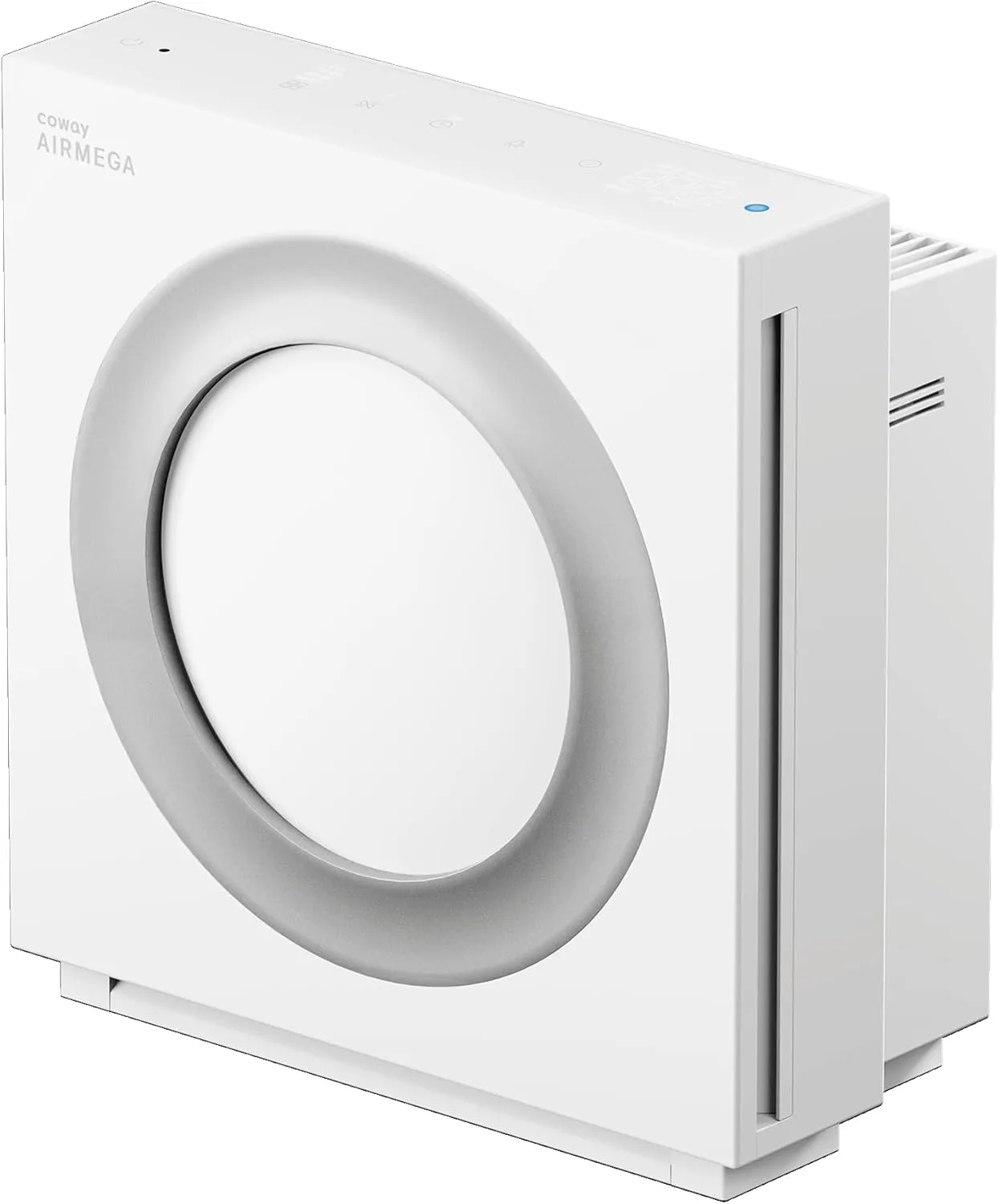
Coway Airmega Mighty2 Review: CADR, Noise and Rattle Reports (2026)
Disclosure: CleanAirAdviser may earn a commission if you buy through an Amazon link on this page, at no extra cost to you. The commission does not change this verdict.
Quick answer: This coway airmega mighty2 guide highlights the evidence, practical fit, and buying limits that matter before you decide.
Coway Airmega Mighty2 specifications and test results
| Item | Result | Source and context |
|---|---|---|
| Model | AP-1512N | Coway product page and manual |
| Official smoke / dust / pollen CADR | 240 / 242 / 249 cfm | Coway published figures |
| HouseFresh Turbo estimate | 260 cfm; PM1 zero in 23 minutes | Purchased unit in a 728-cu.-ft. room |
| HouseFresh speed-two estimate | 151 cfm; PM1 zero in 38 minutes | 42.6 dBA from three feet |
| Sound | 35.9 to 56.9 dBA | HouseFresh, Sleep through Turbo |
| Power | 0.39 W standby to 49.12 W Turbo | HouseFresh energy-meter results |
| Useful room size | About 360 sq. ft. from official smoke CADR at 5 ACH | Eight-foot ceiling; maximum speed |
| Filters | Slide-out washable prefilter plus bonded Max2 particle and pellet-carbon filter | AP-1512N-FP replacement |
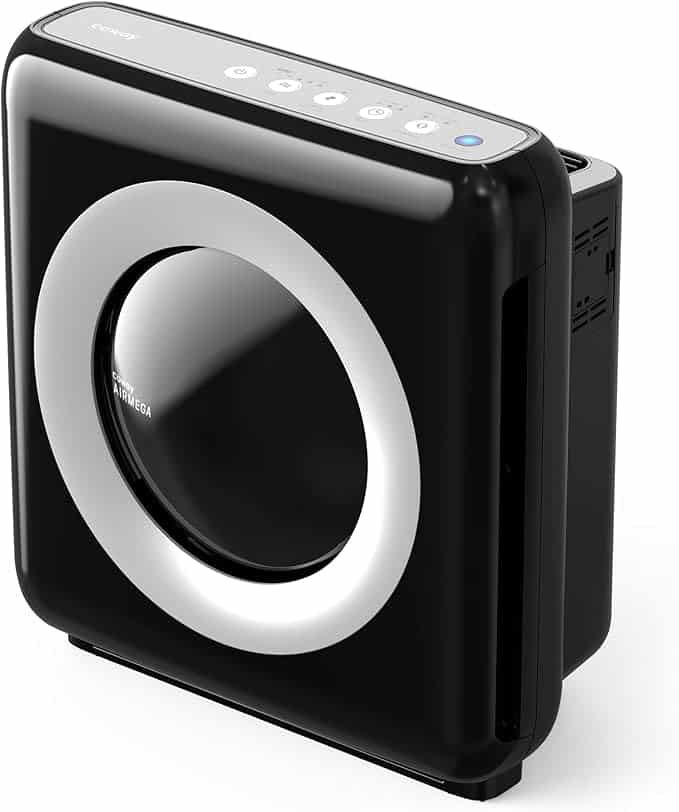
| Sensor | MegaScan laser sensor with PM1, PM2.5, and PM10 readings | On-device numerical display |
| Modes | Smart, Eco, Sleep, speeds 1 to 3, Turbo, timer | No Wi-Fi, app, or remote |
| Warranty | 3 years | Confirm registration and current terms |
The two airflow numbers are not a contradiction. Coway publishes certified or manufacturer CADR values using defined test aerosols. HouseFresh estimates PM1 CADR from its own room test and natural ventilation. Use Coway’s 240 cfm smoke figure for standardized room sizing and HouseFresh’s results for an independent real-room comparison.
Air-cleaning performance
HouseFresh bought a Mighty2 and filled its 728-cubic-foot test room with incense smoke. At Turbo, the purifier brought PM1 to zero in 23 minutes. Based on that decay curve and the room’s natural ventilation, HouseFresh estimated 260 cfm PM1 CADR.
The result puts Mighty2 near the top of the conventional medium-size class. In the same test environment, the original AP-1512HH took 26 minutes with its ionizer enabled and 29 minutes with it disabled. The Levoit Vital 200S also took 23 minutes, while the Winix 5510 and 5520 took 24 minutes. One minute is not a life-changing difference, but the comparison shows that Mighty2 delivers genuinely competitive airflow.
Its speed-two result is more useful for normal life. HouseFresh measured 42.6 dBA and a 38-minute clearance time, estimating 151 cfm. That is enough for roughly 226 square feet at five air changes per hour while staying below HouseFresh’s 45-dBA quiet target.
WIRED used a different smoke-tent method. The reviewer reported visual smoke clearing in about 50 seconds and the built-in indicator returning to its clean color after another three minutes and 20 seconds in Auto mode. That test is useful for sensor response and side-by-side context, but it should not be converted into CADR or compared directly with HouseFresh’s room.
The fair conclusion is simple: Mighty2 is not merely an attractive sensor upgrade. It is a fast particle purifier at maximum and an unusually capable one at a comfortable middle speed.
Room size: why 1,800 square feet is not the buying number
Coway says Mighty2 purifies up to 1,800 square feet in 60 minutes. Its specification table explains that this is one air change per hour. One pass per hour is not the same as repeatedly filtering a bedroom or living room.
For an eight-foot ceiling, five air changes per hour requires:
CADR = room area × 8 × 5 ÷ 60
Using the official 240 cfm smoke CADR gives about 360 square feet at five ACH. HouseFresh’s 260 cfm estimate gives about 390 square feet in its PM1 context. We recommend approximately 350 to 390 square feet at maximum speed, not an entire 1,800-square-foot divided home.
At speed two, HouseFresh’s 151 cfm estimate supports about 226 square feet at five ACH. High ceilings, open doors, smoke infiltration, and lower speeds all justify a smaller target or an additional purifier.
Noise: Mighty2’s strongest practical advantage
HouseFresh measured 35.9 dBA in Sleep, 38.1 at speed one, 42.6 at speed two, 49.3 at speed three, and 56.9 at Turbo from three feet. Its background level was close to the lowest results, so Sleep may be quieter than the meter could distinguish.
These measurements compare well with similarly fast conventional machines. HouseFresh measured the Vital 200S at 57.7 dBA maximum and the Winix 5510 at 67.2. The original Coway AP-1512HH reached 60.1. Mighty2 therefore combines top-tier particle speed with a less intrusive high setting, while its speed-two result is the real highlight.
WIRED measured roughly 65 to 70 dB at maximum in an apartment, much higher than HouseFresh and Coway. Measurement distance, room reflections, instrument settings, and sample differences can change a reading. HouseFresh publishes a fixed three-foot setup across products, so we use it for comparisons. WIRED’s result is a reminder that a buyer’s room may not reproduce a laboratory-style number.
Early fan-rattle reports
Several July and August 2026 owner posts describe a faint or annoying mechanical rattle, especially at lower speeds. One owner who purchased from Coway Canada said the sound resembled an issue heard in HouseFresh’s video and described a difficult return process. Another Amazon buyer replied that a new unit rattled immediately. A separate discussion reports slow warranty communication.
These are owner reports, not a representative reliability study. They do not reveal how many units were sold, how many rattle, whether one production batch is involved, or whether shipping damage contributed. The written HouseFresh review does not publish a failure-rate finding. We therefore will not call the issue universal or declare the product defective.
The reports do justify a practical arrival test:
- Remove every piece of filter packaging and confirm the filter and prefilter are seated correctly.
- Place the purifier on a hard, level surface away from a wall.
- Run Sleep, speeds one through three, and Turbo for several minutes each.
- Listen for a mechanical rattle separate from normal airflow.
- Record a short video if the sound persists and contact the seller within the return window.
- Do not open the motor housing or attempt a repair that could affect warranty coverage.
We will update this section if Coway publishes a service bulletin or broader data becomes available.
Filter design and maintenance
Mighty2 replaces the original Mighty’s separate carbon sheet and particle filter with a larger bonded Max2 cartridge. HouseFresh photographed visible carbon pellets rather than carbon-impregnated fabric. The larger filter and pellets are meaningful improvements for ordinary odor support.
Bonding creates a tradeoff. Carbon can lose useful adsorption before particle media becomes too restrictive, especially around cooking, smoke, or strong odors. Because the layers are one assembly, you replace both together. Serious recurring VOC or gas problems call for a machine with pounds of sorbent, not a modest residential cartridge.
The replacement is AP-1512N-FP. It does not fit the older AP-1512HH Mighty or Airmega 200M, and their filter sets do not fit Mighty2. Similar names are a common ordering trap.
Coway lists up to one year for the Max2 filter. Treat that as guidance, not a promise. Runtime, fan speed, smoke, dust, pets, and prefilter maintenance change loading. The percentage indicator estimates service based on the machine’s logic; it does not directly measure every part of filter condition.
The slide-out washable prefilter is excellent. It can be removed from the side without opening the front panel, reducing the chance of disturbing captured hair and dust. Vacuum it or wash it according to the manual, and allow it to dry fully before reinstalling. Do not wash the Max2 cartridge.
Our Mighty2 replacement-filter guide covers the filter code, price checks, maintenance, compatibility, and reset steps.
Particle sensor, display, and modes
The MegaScan laser sensor reports numerical estimates for PM1, PM2.5, and PM10. It is a major improvement over the original Mighty’s basic color-only dust indicator. HouseFresh found the sensor quick to respond, and WIRED reported that it returned the purifier to a clean state appropriately after smoke testing.
The numbers are particle concentrations or estimates from a consumer sensor, not a complete indoor-air diagnosis. The display cannot identify pollen, mold, bacteria, allergens, VOCs, carbon monoxide, or radon by name. A low PM2.5 value does not prove that gases are safe.
Smart mode adjusts fan speeds one through three based on detected particles. Turbo remains a manual high-output choice. Eco mode can stop the fan when the sensor sees clean air. Sleep responds to darkness. The timer runs up to 12 hours.
There is no Wi-Fi, mobile app, remote, history graph, or voice integration. A smart plug can provide simple power scheduling, but it cannot expose sensor data or change modes. Test power-loss behavior before relying on any smart-plug routine.
No ionizer, but read the HEPA wording carefully
Mighty2 removes the old Mighty’s optional Vital Ion system. The machine relies on its fan, prefilter, particle media, and carbon. This eliminates the need to remember an ionizer setting and appeals to buyers who want mechanical filtration only.
Coway’s U.S. page says the filter captures over 99.97 percent of 0.3-micron particles and calls it HEPA in the product description. HouseFresh reports the supplied filter as “HEPA-grade” in Sleep mode and explains that classification can change with face velocity. We would not add an H13 claim that neither source supports for this U.S. model.
Does the wording undermine performance? The 23-minute PM1 result says no. Whole-room cleaning depends on efficiency and airflow together. Buyers who require a particular certification for medical, occupational, or regulatory reasons should request the underlying test document and verify its speed, aerosol, and standard instead of relying on a retail badge.
Power use and real ownership cost
HouseFresh measured 0.39 watts in standby, 2.53 in Sleep, 4.85 at speed one, 10.28 at speed two, 19.88 at speed three, and 49.12 at Turbo. The old AP-1512HH drew 75.3 watts at its highest setting in the same reviewer’s testing, so Mighty2 cleans faster while using materially less maximum power.
HouseFresh estimated $75.95 per year for continuous Turbo operation using its June 2026 electricity assumption, plus a $69.99 genuine filter reference price. Most homes will spend less on power because the purifier will not stay at Turbo all year. Local electricity rate, runtime, fan speed, filter price, and replacement timing determine actual cost.
Do not compare five-year totals built from an invented “average wattage.” Use your local rate and a realistic speed schedule:
Annual electricity cost = watts ÷ 1,000 × hours per day × 365 × local price per kWh
Add the current genuine filter price and any shipping or subscription discount. A sale can change the value decision more than a few watts.
Mighty2 vs AP-1512HH, Vital 200S, and Winix 5510
| Model | Independent maximum result | Maximum sound | Best reason to choose it | Main compromise |
|---|---|---|---|---|
| Coway Mighty2 | 23 min; 260 cfm estimated | 56.9 dBA | Excellent quiet-speed performance, numerical sensor, no ionizer | Highest usual price, no app, early rattle reports |
| Coway AP-1512HH | 29 min with ionizer off | 60.1 dBA | Long record, mature filter market, frequent discounts | Older sensor, high maximum power, thin carbon |
| Levoit Vital 200S | 23 min | 57.7 dBA | App, particle sensor, washable front prefilter, lower cost | Bonded filter and narrower current HEPA wording |
| Winix 5510 | 24 min; 249 cfm estimated | 67.2 dBA | App and separate 226-gram pellet-carbon stage | Loud maximum and odor-sensor Auto mode |
Mighty2 is the better new Coway when the price gap from the original is modest. Existing AP-1512HH owners should keep a working machine. The Vital 200S remains the value and app choice, while the Winix is more flexible for ordinary odors.
Read our AP-1512HH vs Mighty2 comparison, Vital 200S review, and Winix 5510 review for the full tradeoffs.
What owners and reviewers report
WIRED tested Mighty2 for three weeks in an apartment with cats, litter boxes, outdoor exhaust, and gas cooking, rating it 8/10. The reviewer liked its automatic operation, filter access, and particle display, while criticizing the lack of an app, remote, and wheels.
Popular Mechanics currently lists Mighty2 as its best overall purifier after in-home use, praising the built-in sensor and reduced litter-box dust. That is a real reviewer observation, not controlled CADR evidence.
Recent Reddit discussions are mixed. Positive owners like the new sensor, no-ionizer design, efficiency, and maintenance. The repeated negative theme is the low-speed rattle and, in a smaller number of reports, slow support. Owner anecdotes are best used to identify what a buyer should check, not to calculate performance or failure rates.
coway airmega mighty2: final decision
Use this coway airmega mighty2 guide to match the option to your room, usage, and maintenance needs.
A sound coway airmega mighty2 decision accounts for real-world fit, ongoing costs, and the limits of the product category.
When comparing choices, keep this coway airmega mighty2 goal in view rather than relying on a single headline claim.
This coway airmega mighty2 guide is designed to support a practical choice, not replace source control or the manufacturer instructions that apply to your model.
Quick verdict: The Coway Airmega Mighty2 AP-1512N is one of the strongest conventional mid-size air purifiers we can recommend in 2026. HouseFresh bought a unit and measured PM1 reaching zero in 23 minutes, with an estimated 260 cfm at Turbo. At the more comfortable speed two, it cleared the same room in 38 minutes at 42.6 dBA. It also removes the old Mighty’s ionizer, adds a fast numerical particle sensor, lowers maximum power use, and makes the washable prefilter easier to remove.
The tradeoffs are a premium price, no app, a bonded filter that forces particle and carbon media to be replaced together, and recent reports of an abnormal fan rattle on some new units. Those reports are too limited to establish a defect rate, but they are credible enough that every buyer should test all speeds while the return window is open.
We did not physically test the Mighty2. This review separates Coway’s specifications, HouseFresh’s purchased-unit measurements, other reviewers’ home tests, and early owner reports. We do not present manufacturer coverage, filter life, or individual anecdotes as guaranteed results.
Buy or skip?
- Buy it when you want high particle airflow at tolerable sound, a numerical PM display, no ionizer, and easy prefilter maintenance.
- Compare first when the Levoit Vital 200S or Winix 5510 costs substantially less.
- Keep your original Mighty if it still works. Mighty2 is a better new purchase, not a necessary upgrade.
- Skip it if an app, remote control, heavy gas adsorption, or proven long-term reliability is essential.
Frequently asked questions
Is the Coway Mighty2 worth buying?
Yes, if you want strong particle cleaning at reasonable sound, a numerical sensor, no ionizer, and easy prefilter access. Compare its price with the Vital 200S and Winix 5510, and test a new unit for rattle immediately.
Is Mighty2 better than the original AP-1512HH?
As a new purchase, yes when the price gap is modest. HouseFresh measured faster maximum and quiet-speed cleaning, lower maximum power, and lower maximum sound. Existing original-Mighty owners do not need to upgrade a working purifier.
How large a room can Mighty2 clean?
About 360 square feet at five ACH from the official 240 cfm smoke CADR and an eight-foot ceiling. HouseFresh’s PM1 estimate supports about 390 square feet in its context. The 1,800-square-foot claim is one air change per hour.
Does Mighty2 have an ionizer?
No. Coway removed the Vital Ion feature used in the original Mighty.
Does it have an app?
No. Controls and particle readings are on the machine. A smart plug provides limited scheduling but not sensor history or remote mode changes.
What replacement filter does it use?
AP-1512N-FP, a bonded Max2 particle and pellet-carbon filter. It is not interchangeable with AP-1512HH or Airmega 200M filters.
How often should the filter be replaced?
Coway lists up to one year. Use the indicator, filter condition, airflow, odor breakthrough, and actual pollution load. Do not treat 12 months as a guarantee in every home.
Is the Mighty2 rattle problem widespread?
There is not enough denominator data to know. Several recent owners report a similar sound, which justifies testing every speed during the return period. It does not prove that most units are affected.
Final verdict
The Coway Mighty2 is a meaningful successor, not a cosmetic update. Its 23-minute HouseFresh result, 38-minute test at 42.6 dBA, lower maximum power, slide-out prefilter, pellet carbon, numerical sensor, and removal of the ionizer make it one of the best conventional medium-room purifiers available.
Its weaknesses are equally clear: no app, a bonded replacement, premium pricing, no long-term reliability record, and a small but concerning cluster of rattle and support reports. Buy from a seller with a clear return process, test it promptly, and keep the packaging until you are satisfied.
Sources
- Coway: Airmega Mighty2 official product page. CADR, room claim, filter, sensor, controls, dimensions, power, and warranty.
- Coway: Mighty2 AP-1512N user manual. Operation, maintenance, placement, modes, and filter instructions.
- HouseFresh: purchased-unit Mighty2 review. PM1 testing, estimated CADR, sound, power, filters, sensor, and comparisons.
- WIRED: Coway Airmega Mighty2 review. Three-week apartment use, smoke-tent test, sensor behavior, sound, pets, and usability.
- Popular Mechanics: tested air-purifier guide featuring Mighty2. In-home litter-box and usability observations.
- Coway Store on Amazon: AP-1512N-FP Max2 filter listing. Current product code and reference price.
- Reddit r/AirPurifiers: Mighty2 rattle and return report. Early owner experience, not failure-rate evidence.
- Reddit r/AirPurifiers: support and RMA discussion. Early owner reports, not representative data.
- HouseFresh: original AP-1512HH purchased-unit review. Ionizer-off performance, sound, and power comparison.
- HouseFresh: Vital 200S purchased-unit review. Particle and sound comparison.
- HouseFresh: Winix 5510 purchased-unit review. Particle, sound, and filter comparison.